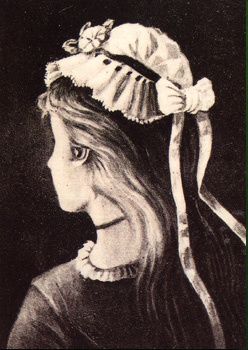
EPVA 1º ESO: Imágenes Multiestables Discover the double image
1. Discover the double image
Objective: Understand what a multistable image is.
Activity:
- Show examples such as the vase/faces or duck/rabbit.
- Ask students to:
- Describe what they see first.
- Try to find the second image.
- Explain what changed in their perception.
Guiding question:
- Why can’t we see both images at the same time?
2. Draw a simple multistable image
Objective: Create an image with two meanings.
Activity:
- Each student draws an image that can be interpreted in two different ways.
Ideas:
- Animal and object.
- Face and landscape.
- Two different animals.
Conditions:
- Use only black and white (high contrast).
- Avoid unnecessary details.
3. Complete the ambiguous figure
Objective: Work on visual interpretation.
Activity:
- Give students an incomplete abstract drawing.
- Each student completes it so that it represents two different things.
4. Pair work: change the perception
Objective: Understand how others interpret images.
Activity:
- One student draws an ambiguous image.
- Their partner writes what they see (without hints).
- Then the creator explains the second interpretation.
5. Multistability with silhouettes
Objective: Explore figure–ground relationships.
Activity:
- Create an image where the background forms a second figure.
Example:
- A tree whose silhouette looks like a face.
6. Reflection
Objective: Consolidate learning.
Questions:
- What is a multistable image?
- What was the most difficult part of creating one?
- How does the brain influence what we see?
1. Descubre la doble imagen
Objetivo: Comprender qué es una imagen multiestable.
Actividad:
- Muestra ejemplos como el jarrón/caras o el pato/conejo.
- Pide al alumnado que:
- Describa qué ve primero.
- Intente encontrar la segunda imagen.
- Explique qué ha cambiado en su percepción.
Pregunta guía:
- ¿Por qué crees que no vemos las dos cosas a la vez?
2. Dibuja una imagen multiestable sencilla
Objetivo: Crear una imagen con doble interpretación.
Actividad:
- Cada estudiante debe dibujar una imagen que pueda interpretarse de dos formas distintas.
- Ideas:
- Animal + objeto
- Cara + paisaje
- Dos animales distintos
Condiciones:
- Usar solo blanco y negro (alto contraste).
- Evitar detalles innecesarios.
3. Completa la figura ambigua
Objetivo: Trabajar la interpretación visual.
Actividad:
- Entrega una figura incompleta (líneas abstractas).
- Cada alumno debe:
- Completarla de forma que represente dos cosas distintas.
- Luego comparan resultados en clase.
4. Trabajo en pareja: cambia la percepción
Objetivo: Entender cómo otros interpretan imágenes.
Actividad:
- Un alumno dibuja una imagen ambigua.
- Su compañero escribe qué interpreta (sin pistas).
- Después el autor explica la segunda interpretación.
5. Multiestabilidad con siluetas
Objetivo: Experimentar con figura-fondo.
Actividad:
- Crear una imagen donde el fondo forme otra figura.
- Ejemplo:
- Un árbol cuya silueta forma un rostro.
6. Reflexión final
Objetivo: Consolidar el aprendizaje.
Preguntas:
- ¿Qué es una imagen multiestable?
- ¿Qué ha sido lo más difícil al crear una?
- ¿Cómo influye el cerebro en lo que vemos?