“Re-imagining a Modern Logo in Medieval Style”
✅ “Re-imagining a Modern Logo in Medieval Style” (Revised Version)
Objective
Students learn how medieval symbols worked, how some modern brands still use heraldic or mythical imagery today, and then redesign a modern logo using authentic medieval iconography.
✅ Instructions for Students
1. Choose a well-known modern logo
You may pick any famous brand:
Nike, Spotify, Instagram, McDonald’s, Minecraft, Amazon, Mercedes, Starbucks, YouTube, etc.
New addition:
You may also look at brands that already use medieval-style symbols as inspiration examples, such as:
• Arm & Hammer — arm with hammer (medieval guild-style emblem)
• Mobil Pegasus — mythical winged horse
• Fleur-de-lis–based logos used by sports clubs, civic institutions, or regions
• Lamborghini — heraldic shield + animal emblem
• Rolls-Royce — heraldic monogram aesthetics
• Car brands using animals (Jaguar, Ferrari) with medieval-style symbolism
These examples help you see that “medieval branding” still exists in modern design.
2. Analyze what the modern logo represents
What idea does the brand communicate?
Speed • Communication • Creativity • Power • Energy • Protection • Community • Adventure • Quality
Write one key idea.
3. Research medieval symbols
Choose elements that match the meaning of your modern brand.
Examples of medieval symbols:
• Lion → courage, strength
• Eagle → vision, authority
• Dragon → protection, victory
• Phoenix → rebirth, transformation
• Tower → defense, stability
• Gothic arch → elegance, harmony
• Medieval banner → identity, status
Use animals, plants, mythical creatures, architectural frames, and color symbolism.
4. Create a large medieval version of the logo
Make your final artwork on A3 or poster board (cartulina).
Keep the design bold, symbolic, and easy to read from far away—just like real medieval emblems.
✅ Design Requirements
Your medievalized logo must include:
✅ One central symbol (animal, object, mythic creature)
✅ A medieval architectural frame (shield, arch, window, banner, etc.)
✅ At least two symbolic elements (animal, plant, pattern, object)
✅ Color choices with medieval meaning
✅ Optional: a motto written on a medieval ribbon or scroll
✅ Final Presentation
Each student explains:
• Why they chose this symbol
• What medieval elements they added
• How these choices transform the message of the modern brand
• What story or identity the “medieval logo” communicates now
✅ Gallery Walk
Display all posters around the room as a “Medieval Branding Exhibition.”
Students walk around, observe, and compare how different modern identities were translated into medieval visual language.
What is a medieval logo?
A medieval logo is basically a symbol used in the Middle Ages to show identity, power, or belonging, just like modern logos do today.
People didn’t have brands like Nike or YouTube, but they did use:
- Coats of arms
- Seals
- Banners
- Shields
- Decorated initials or emblems
These worked exactly like logos: they represented a group, a person, or an institution.
Key points students should understand
- Simple and easy to recognize
Medieval symbols had to be seen from far away on shields, buildings, or flags.
ANIMALS / ANIMALES
Lion – León
Strength, courage, leadership. – Fuerza, valor, liderazgo.
Eagle – Águila
Power, vision, authority. – Poder, visión, autoridad.
Dragon – Dragón
Protection, bravery, victory over evil. – Protección, valentía, victoria sobre el mal.
Griffin (lion + eagle) – Grifo (león + águila)
Guardianship, intelligence, and strength combined. – Guardianía, inteligencia y fuerza combinadas.
Unicorn – Unicornio
Purity, magic, goodness. – Pureza, magia, bondad.
Wolf – Lobo
Loyalty to the group, survival, determination. – Lealtad al grupo, supervivencia, determinación.
Bear – Oso
Power, protection, confidence. – Poder, protección, seguridad.
Stag (deer) – Ciervo
Nobility, renewal, peace, nature. – Nobleza, renovación, paz, naturaleza.
Boar – Jabalí
Fearlessness, determination, survival instinct. – Valentía, determinación, instinto de supervivencia.
Swan – Cisne
Beauty, grace, inner strength. – Belleza, gracia, fuerza interior.
Falcon – Halcón
Focus, speed, hunting skill. – Concentración, velocidad, habilidad para cazar.
Owl – Búho
Wisdom, observation. – Sabiduría, observación.
Snake – Serpiente
Healing, transformation, danger. – Curación, transformación, peligro.
Fox – Zorro
Cleverness, strategy. – Astucia, estrategia.
Hound / Dog – Sabueso / Perro
Loyalty, companionship, protection. – Lealtad, compañía, protección.
FLOWERS & PLANTS / FLORES Y PLANTAS
Rose – Rosa
Love, beauty, secrecy. – Amor, belleza, secreto.
Lily (Fleur-de-lis) – Lirio (Flor de lis)
Purity, light, noble birth. – Pureza, luz, nobleza.
Ivy – Hiedra
Eternal life, loyalty, strong bonds. – Vida eterna, lealtad, vínculos fuertes.
Oak leaves / Oak tree – Roble / Hojas de roble
Strength, endurance, stability. – Fuerza, resistencia, estabilidad.
Laurel – Laurel
Victory, honor. – Victoria, honor.
Vine / Grapevine – Vid
Connection, community, abundance. – Conexión, comunidad, abundancia.
Palm leaf – Hoja de palma
Triumph, celebration. – Triunfo, celebración.
Thistle – Cardo
Defense, protection. – Defensa, protección.
Wheat – Trigo
Life, generosity, prosperity. – Vida, generosidad, prosperidad.
Lotus-style forms – Formas tipo loto
Spiritual growth, enlightenment. – Crecimiento espiritual, iluminación.
Acorns – Bellotas
Potential, youth becoming strength. – Potencial, juventud que se convierte en fuerza.
Poppy – Amapola
Sleep, dreams, remembrance. – Sueño, sueños, recuerdo.
Short combined examples for students
You can give these quick combos to spark ideas:
- Lion + red + shield → brave and strong identity
- Swan + blue + arch → elegance, calm, beauty
- Dragon + gold + castle frame → power and protection
- Owl + dark green + vines → wisdom connected to nature
- Rose + silver + gothic window → beauty with delicacy
- Wolf + pine branches + banner → loyalty and teamwork
- They represented identity
A knight, a city, or a noble family had their own emblem.
Think of it like a sports team logo, but medieval. - Most people couldn’t read
So images had to tell the story.
Meanings of well-known contemporary logos
1. Apple
Meaning:
- The bite shows it’s an apple, not a cherry.
- Represents knowledge, discovery and creativity.
- Simple shape → modern, clean, easy to recognize.
Connection to medieval ideas:
Knowledge (like “the tree of knowledge”), identity through symbolism.
2. Nike
Meaning:
- The “swoosh” represents movement and speed.
- Named after the Greek goddess of victory.
- Suggests energy, action, achievement.
Connection to medieval ideas:
Victory was also symbolized with laurel wreaths, wings, heroic animals.
3. Adidas
Meaning:
- The three stripes often shown as a “mountain.”
- Symbolizes challenges and personal growth.
- Represents athletes overcoming obstacles.
Connection:
Medieval symbols also showed personal strengths or battles (like dragons for struggle).
4. McDonald’s
Meaning:
- The golden arches are meant to look welcoming and warm.
- The “M” is simple, bold, and instantly recognizable.
- Yellow and red stimulate appetite and energy.
Connection:
Bright medieval colors symbolized importance, warmth and attraction.
5. Amazon
Meaning:
- The arrow from A → Z means “everything from A to Z.”
- The arrow looks like a smile (customer satisfaction).
- Friendly, simple design.
Connection:
Medieval symbols often hid multiple meanings in one image.
6. Google
Meaning:
- Uses primary colors but breaks the pattern with green (“we don’t follow the rules”).
- Represents creativity, playfulness and openness.
Connection:
Medieval manuscripts also used bright color symbolism to show meaning.
7. Mercedes-Benz
Meaning:
- The three-pointed star = dominance on land, sea and air.
- Represents luxury, engineering, high quality.
Connection:
Stars and geometric symbols were used medievally for power or divine order.
8. Starbucks
Meaning:
- The siren (mythical creature) represents mystery, allure and the sea.
- Connects to adventure and global trade (coffee origins).
- Invites curiosity.
Connection:
Medieval art also used mythical creatures to communicate deeper meanings.
9. Spotify
Meaning:
- The curved lines represent sound waves.
- Conveys music, movement and digital streaming.
- Fresh, simple, modern identity.
Connection:
Medieval symbols for music often included harps, ribbons, or rhythmic patterns.
10. YouTube
Meaning:
- The play button shows “press to watch.”
- Red grabs attention quickly.
- Instant recognition of video content.
Connection:
Medieval icons also used clear visual cues so people could “read” images quickly.
Concrete examples and references
These links show real medieval symbols and modern reinterpretations:
Real medieval symbols
- British Library: Medieval heraldry
https://www.bl.uk/catalogues/illuminatedmanuscripts/TourHeraldry.asp - The Metropolitan Museum of Art: Medieval art collections
https://www.metmuseum.org/art/collection/search#!/search?material=Medieval - Heraldry Wiki (huge database of medieval coats of arms)
https://heraldry-wiki.com/
Modern reinterpretations (great for students)
- Medieval Branding by Ilya Stallone
https://geohistorias.es/medieval-branding-modern-day-logos-re-imagined-in-medieval-style-by-ilya-stallone/ - Another gallery of Stallone’s medieval logo redesigns
https://www.designboom.com/art/ilya-stallone-famous-brand-logos-medieval-style-03-14-2022/
edieval Branding: Modern Day Logos Re-imagined in Medieval Style by Ilya Stallone
In his project called «Medieval Branding,» graphic artist Ilya Stallone from Saint Petersburg, Russia, re-imagined famous modern day brands as if they were businesses during the Middle Ages.
Stallone retained the main graphical elements that make the various logos instantly recognizable, but adapted them for the medieval period. Thus, Audi’s logo became interlinked wagon wheels, whereas YouTube’s logo looks like a puppet show, and Microsoft’s Windows are made from panes of a gothic castle window.
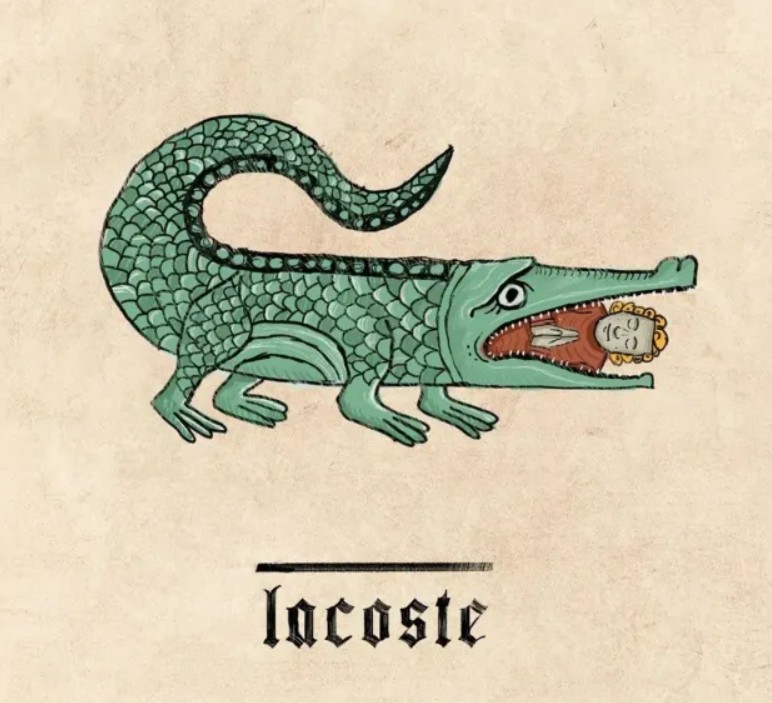
Naturally, a dose of dark and offbeat humor found its way into Stallone’s re-imagined medieval logos: Lacoste’s alligator was shown to swallow a praying man and Burger King’s brand shows two kings sandwiched instead of meat patties in the burger. Brilliant!
In his project called «Medieval Branding,» graphic artist Ilya Stallone from Saint Petersburg, Russia, re-imagined famous modern day brands as if they were businesses during the Middle Ages.
Stallone retained the main graphical elements that make the various logos instantly recognizable, but adapted them for the medieval period. Thus, Audi’s logo became interlinked wagon wheels, whereas YouTube’s logo looks like a puppet show, and Microsoft’s Windows are made from panes of a gothic castle window.
Naturally, a dose of dark and offbeat humor found its way into Stallone’s re-imagined medieval logos: Lacoste’s alligator was shown to swallow a praying man and Burger King’s brand shows two kings sandwiched instead of meat patties in the burger. Brilliant!
Images: ilya_stallone_artist/Instagram
#logo #brand #medieval #IlyaStallone

Lacoste alligator swallowing a praying man.

Windows logo redrawn in medieval style as panes of a gothic castle window.

Burger King’s brand re-imagined as two sandwiched medieval kings.

Audi’s interlinked rings re-imagined as interlinked wagon wheels.

YouTube logo featuring Old English script and puppetry motif.
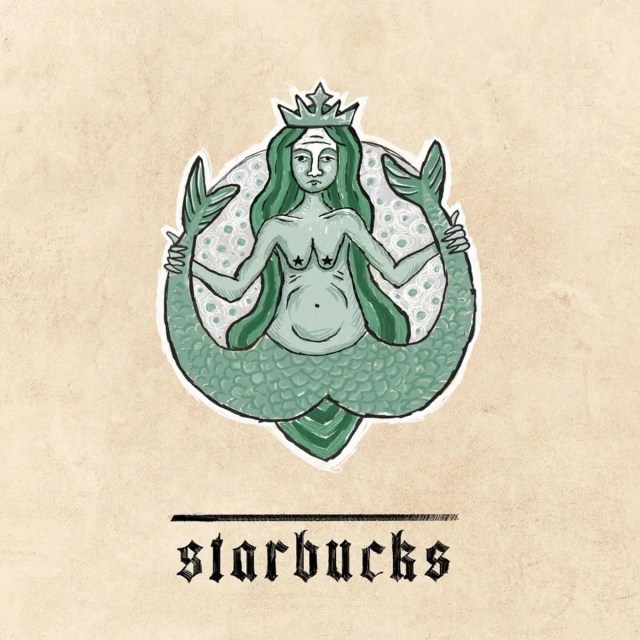
Starbuck’s mermaid logo re-drawn in medieval style.

Instagram’s camera logo re-imagined as a canvas on an easel.

Puma brand redrawn in medieval style.