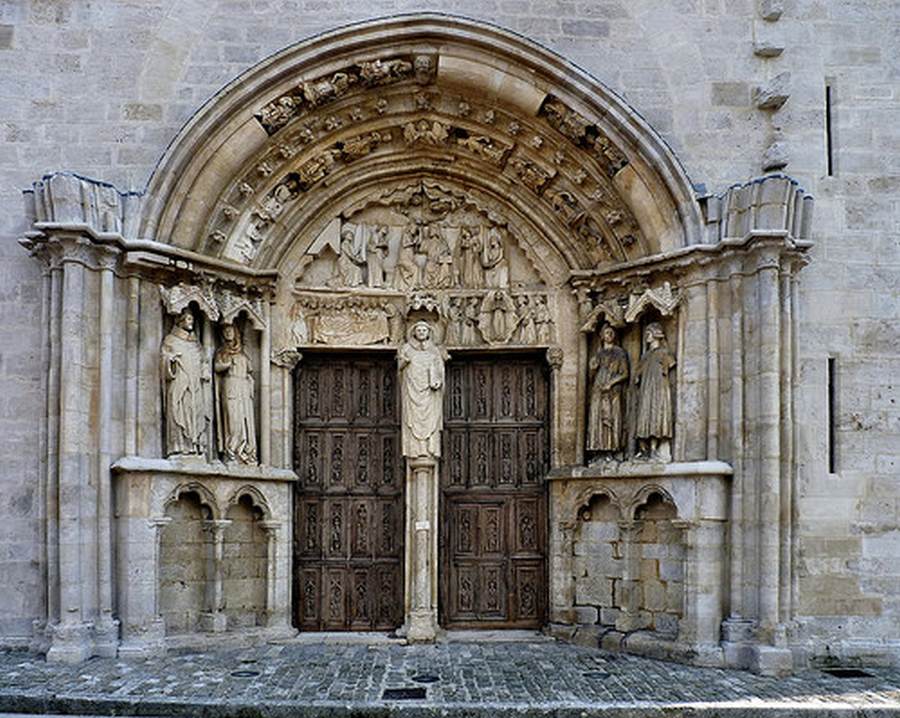
Romanesque and Gothic portals
Mural painting lost significant importance during the Gothic period for several key reasons:
- Architectural Changes:
- During the Gothic period, architectural developments, particularly the rise of large windows, pointed arches, and extensive use of stained glass, shifted the focus from wall decorations to creating light-filled interiors. Churches and cathedrals, which were often the primary venues for mural paintings, now emphasized verticality and windows, leaving less space for large-scale wall paintings.
- Focus on Stained Glass:
- Stained glass became a dominant art form during the Gothic period. It allowed for elaborate storytelling through vibrant images and was seen as a more suitable medium to convey religious themes and narratives, complementing the light-filled Gothic architecture.
- Manuscript Illumination:
- Gothic art saw a flourishing of manuscript illumination. Books became an important vehicle for artistic expression, and manuscripts, often lavishly decorated with intricate designs and small-scale paintings, supplanted murals as the primary form of visual communication in religious and secular contexts.
- Economic and Social Changes:
- The economic and social shifts in the late Middle Ages, including the growth of urban centers and the increased literacy of laypeople, encouraged the production of portable, movable art, such as painted altarpieces and panel paintings. These were easier to transport and more adaptable to different settings than murals.
- Patronage and Innovation:
- The rise of new patronage systems, including guilds, towns, and affluent individuals, focused more on smaller, portable artworks. Wealthier patrons often commissioned altarpieces, retables, and panel paintings, which were more adaptable to personal or community worship settings.
- Shift in Artistic Techniques:
- The Gothic period introduced innovations in painting techniques, such as the use of tempera on wooden panels and oil painting, which provided new avenues for detailed and more portable artwork. This shift further diminished the dominance of mural paintings.