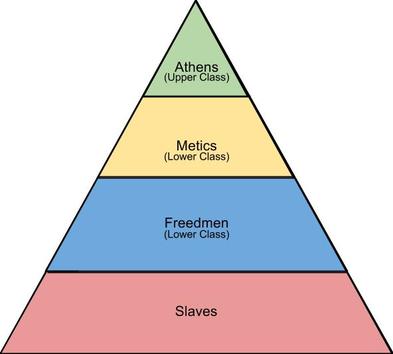
Social Classes in Athens
1. Citizens (Athenian men)
Top of the social pyramid
- Free adult males born to two Athenian parents
- Full political rights: vote, speak in the Assembly, hold office
- Could own land and inherit property
- Obliged to serve in the military and perform public duties (liturgies)
⚠️ Note: Even poor citizens still had political power.
2. Women citizens
Socially respected, politically excluded
- Born to citizen families but no political rights
- Could not vote or hold office
- Lived under guardianship of a male (kyrios)
- Main role: managing the household and producing legitimate heirs
3. Metics (resident foreigners)
Economically important, politically powerless
- Free non-citizens living permanently in Athens
- Often merchants, artisans, intellectuals
- Paid the metic tax and needed a citizen sponsor
- No voting rights, usually no land ownership
4. Freed slaves
Legally free, socially limited
- Former slaves who had been manumitted
- Not citizens and had restricted legal rights
- Often remained tied to former owners
- Usually worked in trades or small businesses
5. Slaves
Bottom of society
- Considered property, not citizens
- Could be Greeks or non-Greeks
- Worked in homes, workshops, farms, and silver mines
- No legal rights, though some could earn or save money
Alternative classification (by wealth, not status)
Athens also classified male citizens by property:
- Pentakosiomedimnoi – very wealthy
- Hippeis – cavalry class
- Zeugitai – hoplite farmers
- Thetes – landless laborers (still could vote!)