Romanesque Art
FASE 1: Preparación en la Pizarra (Vocabulary)
Vocabulary List:
- Educational purpose: Propósito educativo.
- Good and evil: El bien y el mal.
- Central nave: Nave central (el pasillo principal de la iglesia).
- Barrel vault: Bóveda de cañón (el techo curvado).
- Apse: Ábside (la parte final de la iglesia, donde está el altar).
- Fresco: Fresco (técnica de pintura en la pared).
- Empty spaces: Espacios vacíos.
- Mandorla is an almond-shaped halo or aura of light enclosing the entire figure of a sacred person, such as Christ or the Virgin Mary, in traditional Christian art.
English: Something symbolic is an action, object, or expression that represents or stands for a deeper idea, quality, or abstract meaning beyond its literal function.
Español: Algo simbólico es una acción, objeto o expresión que representa o encarna una idea más profunda, cualidad o significado abstracto más allá de su función literal.


The Meaning of Romanesque Art
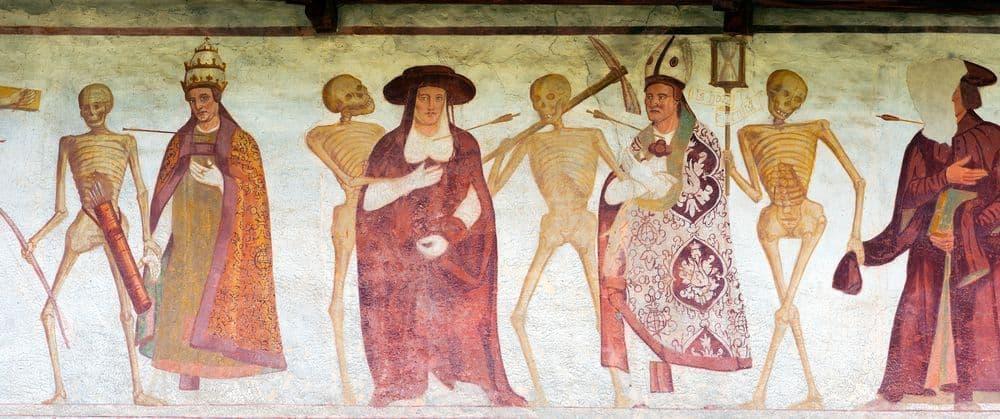
In the Middle Ages, most people could not read or write. Because of this, Romanesque art was very important for education. Churches were like big stone books. They helped people understand the Bible and the difference between good and bad.
A Romanesque church is a special symbol. It usually has the shape of a cross. The main part of the church (the nave) is quiet and dark. The stone walls are very thick, and the windows are very small. It is like a safe cave. It protects people from the dangerous outside world. Above, the curved stone roof looks like a perfect sky. At the end of the church is the apse, the most important and holy place.
Inside, the walls have beautiful paintings called frescoes. Artists painted in all the empty spaces. The most important people, like Jesus or Mary, are always bigger than the other people. Outside, above the doors, scary stone figures warned people about doing bad things. These churches are not very tall. They stay close to the ground. This helps people find peace and look inside their hearts.
FASE 3: Ejercicios Finales (Reading Comprehension & Symbolism)
Una vez corregido el dictado en la pizarra, los alumnos deben realizar estas dos actividades para asentar los conceptos históricos y simbólicos.
Exercise 1: True or False?Read the sentences and write True (T) or False (F).
- In the Middle Ages, many people could read the Bible easily. ( ___ )
- Romanesque art helped to teach people about good and bad. ( ___ )
- The church has big windows and a lot of light. ( ___ )
- Romanesque churches usually have the shape of a cross. ( ___ )
- In the paintings, the most important people are bigger. ( ___ )
- The stone figures over the main doors were happy and welcoming. ( ___ )
- The church is a symbol of a safe place. ( ___ )
Exercise 2: Match the parts with their meaning!Connect the part of the church (1-5) with its meaning (A-E).
- The paintings on the walls (frescoes)
- The Romanesque church (dark with thick walls)
- The curved stone roof
- The scary stone figures above the doors
- The size of the painted people
- A) It is like a perfect sky that covers the building.
- B) It shows who is the most important person (like Jesus or Mary).
- C) They warned people about doing bad things before they entered.
- D) They are like a book to teach people who cannot read.
- E) It is like a safe cave that protects people.