The Mandorla and the Vesica Piscis
The Mandorla and the Vesica Piscis
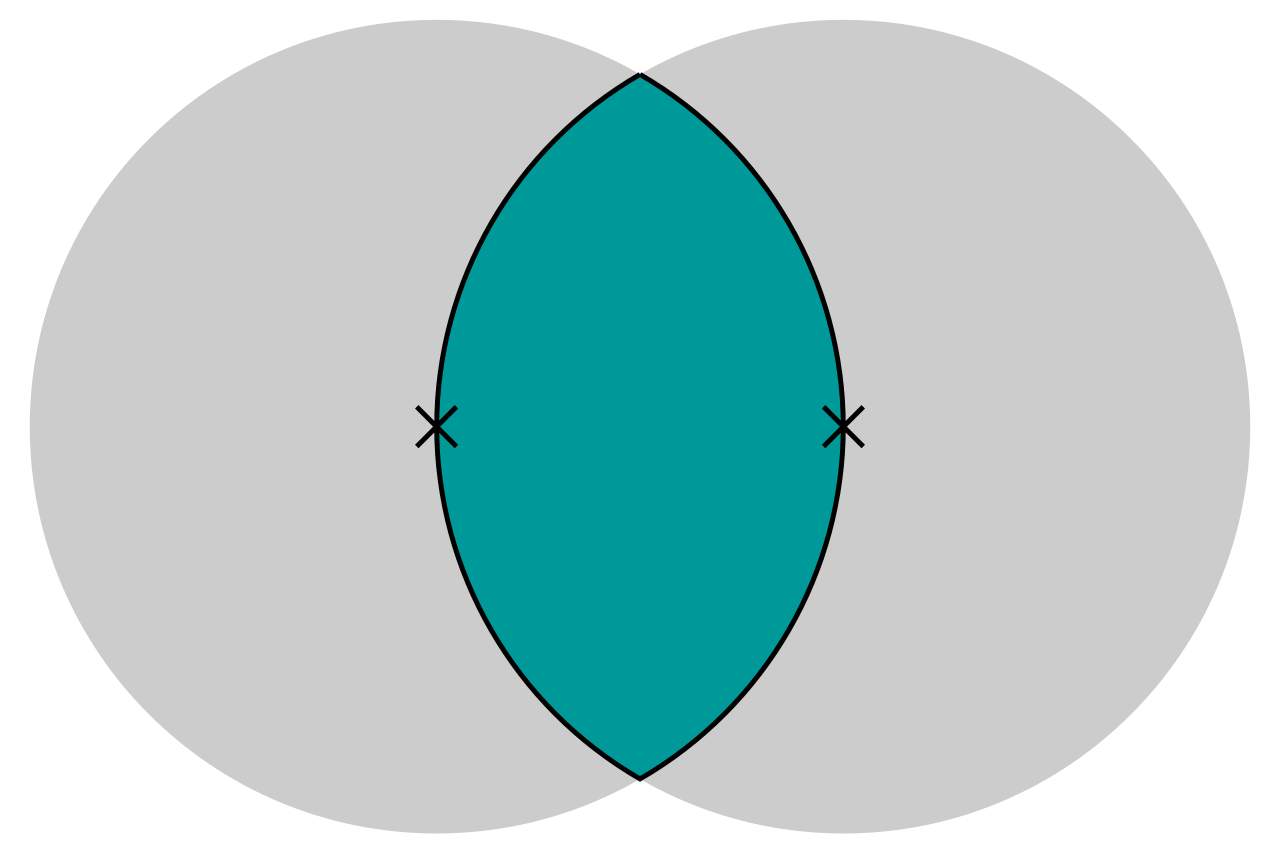
Did you know that the «mandorla» in old churches is a famous geometric shape? Its real name is the Vesica Piscis. You make it by putting two equal circles together. The center of one circle touches the edge of the other. The space in the middle looks like an almond. That is the Vesica Piscis! In Romanesque art (11th and 12th centuries), this shape has a special meaning. One circle is the spiritual world (heaven). The other circle is the physical world (earth). The Vesica Piscis in the center is a magical door that connects the two worlds. It shows that the divine and the human share the same universe. Today, you can see this beautiful stone shape above the doors of many churches. But it is not only in old buildings! Today, we use it in school too. The Venn diagram in mathematics is the exact same shape, and we use it to compare things. Also, some famous brands use this almond shape in their logos because it is a simple, perfect, and beautiful design.
Vocabulary / Vocabulario
| English | Spanish | English | Spanish |
| Shape | Forma | Earth | Tierra |
| Edge | Borde | Share | Compartir |
| Almond | Almendra | Brand | Marca |
| Heaven | Cielo | Compare | Comparar |
Exercises / Ejercicios
1. Reading Comprehension: Short Answer(Comprensión lectora: Pregunta corta)
- According to the text, what two worlds does the Vesica Piscis connect?
- Where can you see the Vesica Piscis in mathematics today?
2. True or False(Lee el texto y decide si las oraciones son Verdaderas (T) o Falsas (F))
- You make a Vesica Piscis by putting three circles together. _____
- The space in the middle looks like an apple. _____
- In Romanesque art, the Vesica Piscis is a magical door. _____
- Famous brands use this shape because it is beautiful and simple. _____
3. Vocabulary Fill in the Blanks(Completa las oraciones con las palabras del vocabulario: shape, edge, heaven, share)
- The circle is a very common geometric __________.
- Please don’t touch the __________ of the paper, you can cut your finger.
- In the text, the spiritual world is __________.
- Good friends always __________ their toys.
4. Drawing Practice(Práctica geométrica) Use a compass to draw two equal circles. The center of the second circle must touch the edge of the first circle. Find the almond shape in the middle (the Vesica Piscis) and color this «magical door».
Answer Key / Hoja de Respuestas
1. Reading Comprehension: Short Answer
- According to the text, what two worlds does the Vesica Piscis connect? The spiritual world (heaven) and the physical world (earth).
- Where can you see the Vesica Piscis in mathematics today? In the Venn diagram.
2. True or False
- You make a Vesica Piscis by putting three circles together. F (You need two equal circles).
- The space in the middle looks like an apple. F (It looks like an almond).
- In Romanesque art, the Vesica Piscis is a magical door. T
- Famous brands use this shape because it is beautiful and simple. T
3. Vocabulary Fill in the Blanks
- The circle is a very common geometric shape.
- Please don’t touch the edge of the paper, you can cut your finger.
- In the text, the spiritual world is heaven.
- Good friends always share their toys.
4. Drawing Practice Actividad práctica. El profesor comprobará visualmente que el alumno ha dibujado dos círculos del mismo tamaño, donde el centro de uno coincide con la línea (borde) del otro, y que ha coloreado la intersección central con forma de almendra (la Vesica Piscis).
Un diagrama de Venn es una representación gráfica que utiliza círculos u otras figuras cerradas superpuestas para mostrar las relaciones lógicas, similitudes y diferencias entre dos o más conjuntos de datos
La vesica piscis es una expresión latina que significa literalmente «vejiga de pez». Recibe este nombre porque la forma de almendra que se genera en el centro se asemeja a la vejiga natatoria (el órgano de flotación) de los peces, y por su estrecha relación histórica con el Ichthys, el símbolo del pez utilizado por los primeros cristianos.
Geométricamente, se crea cuando dos círculos del mismo radio se superponen de manera que el centro de cada círculo se sitúa exactamente sobre la circunferencia del otro.
En el diseño corporativo, esta figura (considerada parte de la geometría sagrada) se utiliza con mucha frecuencia porque visualmente transmite simetría, equilibrio y la unión armoniosa de dos partes diferentes. Estas son las marcas más famosas que basan sus logotipos en esta forma:
- Mastercard: Es el ejemplo más directo y puro. Su logotipo se compone de un círculo rojo y uno amarillo; el área naranja del centro donde ambos colores se fusionan es exactamente una vesica piscis.
- Chanel: El logotipo de las dos letras «C» entrelazadas y opuestas crea una vesica piscis perfectamente proporcionada en el espacio negativo del cruce.
- Gucci: Al igual que Chanel, la intersección entre sus icónicas dos letras «G» mayúsculas entrelazadas forma esta misma geometría central.
- Audi: Los cuatro aros entrelazados (que representan la histórica unión de cuatro fabricantes de vehículos) generan tres formas de vesica piscis en las zonas de intersección de los anillos.
- CBS: El logotipo de la cadena de televisión estadounidense extrae la forma central de la vesica piscis, la posiciona horizontalmente y le añade un círculo en el medio para representar gráficamente un ojo.